


I’ve been in crypto for more than a decade now, and sentiment among natives right now is the worst I’ve seen. Generally in past bear markets, the tourists would leave and the natives would stay, either building something or just questioning their life decisions in group chats and CT. This time it’s the opposite. Tourists, in the form of fintechs and institutions, are rushing to integrate stablecoins, DeFi, and tokenize everything they can put on-chain.
And on the other side, this is the first time I’m seeing crypto natives actually leave the space. One reason is AI, we haven’t had a cool new technology like that since Bitcoin and it’s only natural to lose some talent to it. But others are genuinely burnt out and disappointed and fed up with the state of space right now and what they see as crypto’s future. There’s some part of me that gets this latter group, so it feels like the perfect time to lay out where crypto actually stands and where it’s heading.
The two sides of crypto
I see crypto as divided into two big categories, which for the purpose of this article I’ll call cypherpunk and fintech:
Cypherpunk: Decentralized, permissionless, private, and uncensorable networks that work as an exit valve from current systems, both political (by exiting fiat) and corporate (by having open protocols where users and builders don’t depend on a company’s permission to build a product or migrate their data).
Fintech: Just better tech that helps users and businesses lower costs or work better. Cypherpunk attributes also help this use case (they make the actual product better, I’ll say more about this later), but they’re not as important as in the other category.
The narrative that crypto must be one or the other is ridiculous. Crypto can be both at the same time, they just need to be judged and valued differently. I’m more sympathetic to the cypherpunk side; that’s why I got into it and what I’m working on now. But having worked in fintech for years, I also understand the value of using crypto rails (even with centralized assets) to improve people’s lives.

Why natives are leaving
Some natives are exiting because the cypherpunk part seems to be disappearing, or at least weaker than ever. Five specific concerns come up most often:
Institutions did come for our coins and now we’re angry about it: It was always inevitable that they’d get in, if crypto becomes the backbone of the financial system, institutions have to be part of it. But the way it happened this cycle wasn’t great. Overleveraged DATs buying crypto with debt instead of productive companies earning real revenue and allocating profits into it. Markets will probably take care of this and it’ll fix itself with time.
TradFi and Fintech companies “stealing” the tech: The idea that we built open protocols, and now that they’re good enough, traditional companies will take them and integrate them into their systems without any cypherpunk values. This can’t really happen at scale (maybe for some specific zk use cases), because the tech fundamentally doesn’t make sense if it’s not decentralized. We’ll get to that later.
No decentralized mainstream money: BTC is probably not going to be used as money. Stablecoins will fill that role for the next few years. They have defects: not fixed supply, not decentralized, not permissionless. But they’re a big improvement over the status quo and generally a net positive. More on that later, also.
Market nihilism: Not what you want to see as a builder. Two reasons: regulation made it so real products couldn’t launch a token fairly and pushed speculators to meme coins, and almost all important primitives were built before 2022. The invention of new primitives has historically been the best time to invest in crypto (ICOs, Defi, NFTs), and we only had one big one this cycle: decentralized perps via Hyperliquid, and it did pretty well.
DeFi is riskier than TradFi because of AI: There will be some exploits, but DeFi will survive, use AI defensively and end up as the most antifragile system in the world.
There are some valid claims for all of these and we probably won’t get a cypherpunk utopia, but the overarching claim that the cypherpunk part in crypto is dying is overblown, here’s why:
Cypherpunk values come down to optionality
Cypherpunk values, at their core, come down to optionality. The freedom to always be able to choose what you want to do with your life. The freedom to exit.
But optionality isn’t a given. To have real optionality, you need infrastructure that most people take for granted until they need it. You need privacy. You need decentralized networks. You need money that can’t be frozen or inflated. And you need protocols that don’t depend on corporations or governments to keep running.
This is why cypherpunks fight so hard for things like privacy and decentralization. They don’t want to force everyone to use them, they just want to build the tools because without them, optionality collapses. I remember Zooko saying once that he has no more personal secrets while at the same time building privacy tools for a living, or libertarian Riva Tez saying the endgame is radical optionality, and that she wants to build tools that even communists can use to experiment. Those always stuck with me as the perfect examples of cypherpunk values at work.
Optionality at its core means always having the ability to exit or switch. This is true in the political space, as Balaji writes about: crypto serves as an alternative to fiat, a check on the political system. And it’s true in the business space, as Chris Dixon talks about: open and permissionless protocols let users and entrepreneurs build and switch whenever and wherever they want, without depending on the permission of centralized corporations to do it.
These tools are defensive technologies, and all we need is for them to exist as an option. In a hypothetical world where governments and companies act perfectly, these tools would be worth almost nothing. The value is in having the option to exit, not in the specific price. I don’t think that optionality has changed or weakened in the last few years. Actually, it has strengthened along with the reasons for these tools to exist. Self-custody tools are more accessible than they’ve ever been, privacy tech is meaningfully better than five years ago, transacting on decentralized infrastructure is cheap enough that it’s a real option for most people, all while centralized authorities keep giving us more and more reasons to build it.
The fintech explosion
Optionality doesn’t just mean the freedom to exit, it also means the freedom to build on top of it in whatever way makes sense. Permissionless networks don’t discriminate between use cases. The same infrastructure that lets someone exit fiat also lets a company build a more efficient payment rail. The same composability that lets you self-custody your wealth also lets a fintech app plug into DeFi without asking anyone’s permission. This was always the point. Building open, permissionless networks doesn’t just enable the cypherpunk use case, it enables the fintech one too, it was always inevitable. And right now, that specific space is exploding.
Every finance company in the world is thinking about or already integrating crypto rails into their products in the form of stablecoins, tokenization, or DeFi. And the value for them has nothing to do with cypherpunk values. All they want is to grow their business by either lowering their costs or improving their user experience.
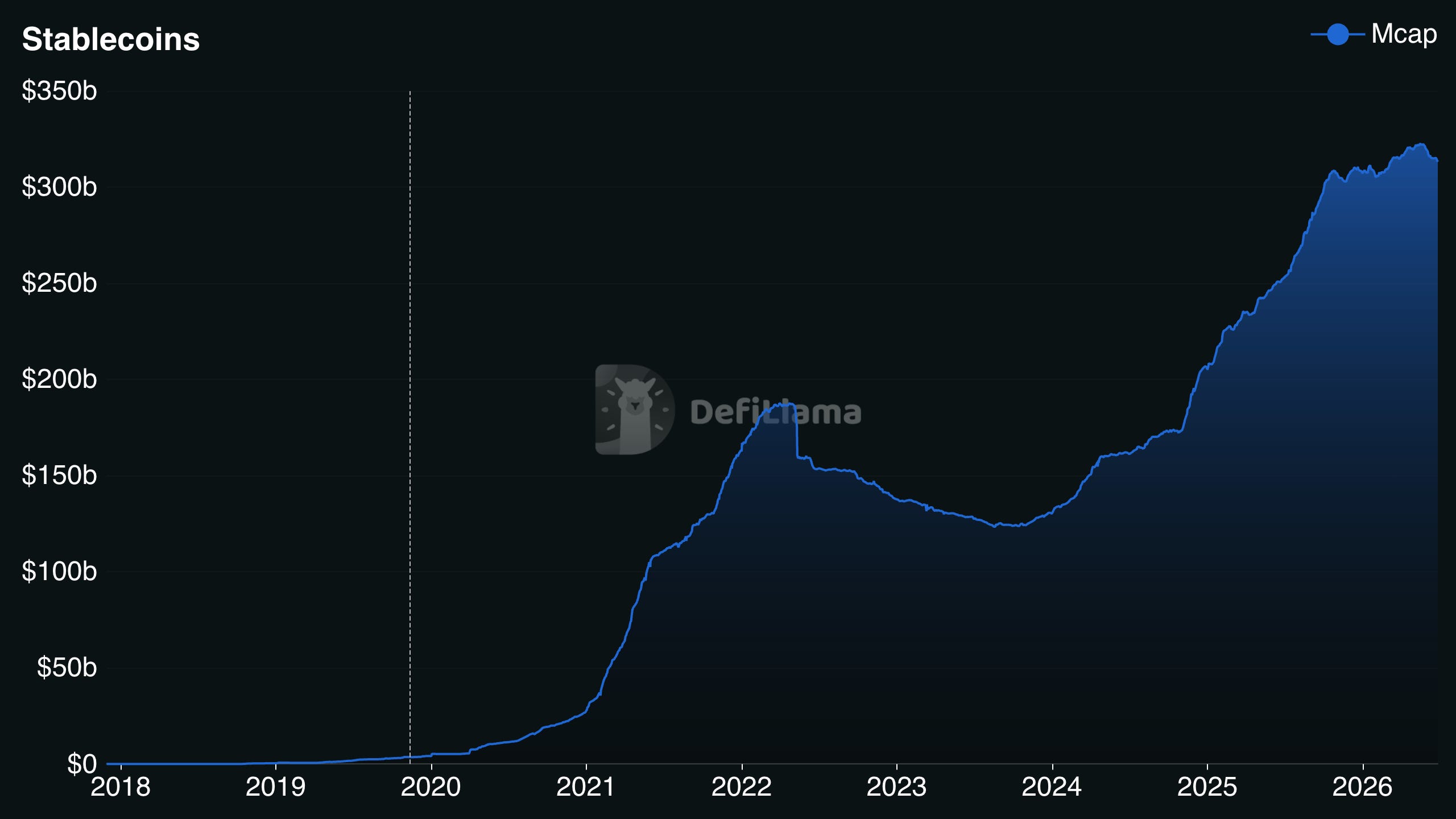
Crypto infrastructure is now ready to handle millions of transactions with high speed and low fees. That enables all kinds of use cases by removing intermediaries that cause a lot of problems for regular users and new fintech startups, by charging high fees or just being too bureaucratic to give access. The decentralized and permissionless nature of DeFi combined with the stability of stablecoins makes it so international payments can be almost 95% cheaper. Companies can now offer users access to dollars and yield without having to ask for permission. And hopefully stablecoins get adopted as a payment method and businesses around the world start saving the 2-4% they pay to process credit/debit card transactions by using crypto as the settlement layer.
Fintech needs decentralized rails
So where does this leave us? Both the cypherpunk and fintech sides of crypto keep growing. They serve different needs and should be valued differently, but they both benefit from the same underlying infrastructure. And fortunately, that infrastructure holds cypherpunk values.
Fintech products are going to get built on decentralized rails, not because these corporations care about decentralization, but because all these systems are better when they are interoperable between each other and finance companies won’t build on their competition’s blockchain, they’ll want credible neutrality. The moment one institution owns the infrastructure, every other institution has to decide whether to trust them for final settlement. They won’t. They’ll demand neutral ground, and trustless settlement between parties that don’t trust each other requires decentralization by definition.
Decentralization and credible neutrality are attributes that tend to emerge with time in crypto and that’s because of the culture those builders have, you could assume Ethereum was going to decentralize itself after the dao fork because of Vitalik’s and other eth builders culture, same with Solana via Mert and Toly, probably same will happen with Hyperliquid, but i don’t think you can assume that’ll happen with corporate blockchains. It’s hard to make decisions in favor of decentralization in big centralized companies like Circle or Stripe.
I’ll take a small tangent here and give my opinion about the valuation debate that’s been going on for the last few years. The cypherpunk and the fintech sides should be valued differently. You can’t have just one valuation model for completely different fundamental use cases.
On the fintech side I agree with people like Yano and the blockworks team that say we need to value these tokens as we value companies, based on clear business metrics. And that’s because the whole value of those products/companies depends on it generating growth and revenue, a centralized app with low activity or growth has zero value.
On the other side as I explained before, a cypherpunk product is a defensive product, an insurance of some kind, what you want is to have the option to use it if you ever need it, so even if it doesn’t have a lot of activity for a period of time it still retains some value, and you can calculate that value in two different ways:
For SOV assets like BTC or Zcash is the necessity of that exit/insurance for the market at any given time, so bitcoin is more valuable if governments are misbehaving and losing the trust of its citizens.
For smart contract blockchains like Ethereum or Solana, it comes mainly from the total value they are securing, so if Ethereum gets even more adoption and is securing trillions of dollars in stablecoins and other tokenized stuff, the valuation of ETH the asset, even if it’s not generating that much revenue or activity, should increase to at least the point where attacking it is not a reasonable action for a bad actor.
How this plays out in practice
With that in mind, let’s look at how this plays out in practice. Here’s how I think about each of the major crypto categories, where the cypherpunk value lives, and where the fintech value is being created.
Store of value:
By store of value I mean crypto assets that are primarily thought of as currency or digital gold as their only objective. Bitcoin and Zcash being the main ones. Limited supply, decentralized and permissionless network, a hedge against governments printing money and destroying your wealth or a hedge against a dystopian surveillance future.
Bitcoin is still the biggest one here and probably stays like that for decades. Biggest network effects and biggest brand as the limited decentralized currency. But it has a few short-term problems to work through.
Saylor being the most obvious. I don’t think the math on Strategy holds long-term. You can’t raise infinite money to keep improving BTC per share forever. Eventually you reach for expensive and short term debt. When those products fail and they lose the ability/trust to keep raising money and by consequence the ability to increase BTC per share, they become irrelevant. Why take the risk of holding MSTR when you can hold real Bitcoin or direct exposure to it via the ETF? Whether they sell or hold the Bitcoin doesn’t matter as much as removing that centralized dependence and market overhang, that will be bullish for Bitcoin long-term.
Then there’s quantum and the security budget, both real problems and Bitcoin maxis are probably the worst group of people to coordinate a solution on. They’ll get there, but it’ll be slow and painful. At the end of the day, if there’s a network sufficiently strong and anti-fragile to go through these problems, that’s Bitcoin. It’ll be rocky for some time, but Bitcoin will be just fine in the end.
Zcash is the other store of value I think about seriously. Privacy is going to matter more as surveillance states mature and AI makes mass monitoring trivially cheap. The recent bug situation showed the downside of being this good at privacy. If there’s an exploit, you can’t verify whether it was used, but the team is probably the best in the space to handle exactly that problem. If they can formally verify supply integrity and keep building on it, Zcash has something Bitcoin doesn’t: real privacy. Bitcoin will survive its rocky road. Zcash, with a different use case has a genuine growth story ahead.
DeFi
DeFi is the most important use case in crypto. Having store of value assets matters a lot more when you can also borrow against it, earn yield, and trade it without asking anyone’s permission. The alternative, holding an asset you can only access through a centralized intermediary, defeats most of the point.
The current narrative that DeFi is just too risky feels overblown. The biggest protocols have had billions sitting in open source code for years, the best hackers in the world have had every incentive to exploit them, and haven’t. Yes, AI is going to stress-test these systems harder than anything before, but it cuts both ways. DeFi will use those same tools defensively, and what survives will come out the other side of that as the most battle-tested financial system ever built.
The primitives already work amazingly well. We’ve had billions of dollars in the biggest lending protocols for years without an intermediary, same for DEXes and similar protocols. The whole DeFi game now is integration: how do you get this into every person’s regular financial life?
The open source and natural composability makes it easy for anyone to integrate it. Protocols become lego bricks that any app can plug into. Because of this, crypto teams are going to have to compete with fintech companies on the consumer side, and fintech companies are experts in exactly what crypto teams lack: UX and user acquisition. That competition will only benefit users.
Stablecoins and Payments
Stablecoins are one of the best products to come out of crypto. They’re not cypherpunk, I don’t agree with Haseeb on that, but they don’t need to be to be genuinely useful. They don’t solve infinite printing or reduce reliance on government money, but they do give people everywhere access to dollars, which are still the best fiat asset by a wide margin. For someone in Argentina or Turkey or Nigeria, that matters enormously. Pair that with DeFi and you can earn yield on those dollars too, something most of the world has never had real access to. And when used on decentralized rails via self-custody wallets, they’re also a better (and more cypherpunk-aligned) product than fiat, even for Americans.
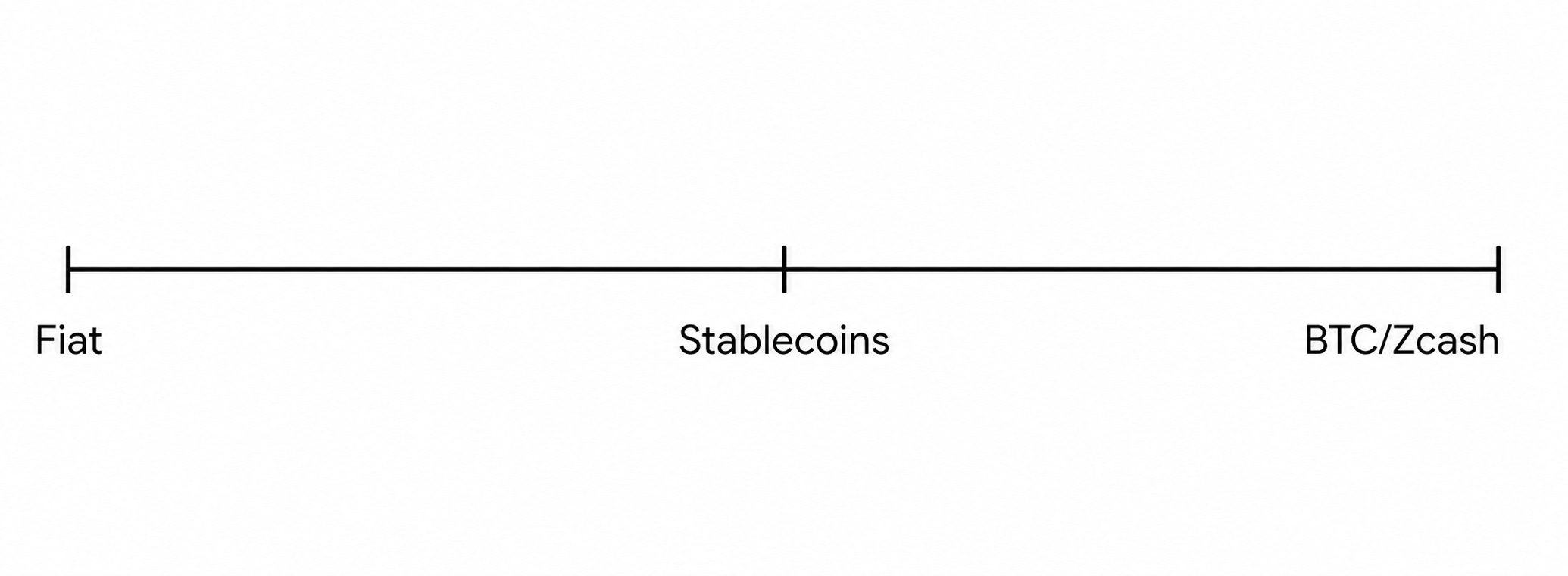
They’re also just better tech for payments: no fees, faster, programmable. The average business pays 2-4% to process a card transaction. That fee is essentially just the cost of the settlement layer, and crypto makes it negligible. For a lot of small businesses, that difference is their entire margin.
The reason stablecoins haven’t been more adopted as payments is UX. Paying with a card or through Google/Apple Pay is genuinely great, and consumers don’t have a strong incentive to switch. Those habits are hard to change. But two trends will accelerate adoption:
First, payment companies are rushing to adopt stablecoins and incentives to build these new payment rails. Infrastructure is almost there. Wallets like Privy let users hold crypto without even knowing it. The moment a large company manages to integrate with Apple or Google Pay, transacting with stablecoins in the back instead of Visa or Mastercard, and giving access to millions of customers, that solves almost the whole UX problem on the user side. On the other side, businesses are too incentivized not to push this further, they’ll offer cash back or discounts at first, then just make a habit of it.
Second, AI agents. Crypto is naturally built for agents. They don’t care about UX. They only care about effectiveness and cost.
Stablecoins are winning the money race for now, and as long as they remain on decentralized networks with self-custody as a possibility, this is a large net positive for the world.
AI
The combination of programmable money and decentralized networks leads naturally to crypto’s next major use case: AI agents and AI infrastructure.
There are 3 main use cases for the intersection of AI and crypto
The clearest one we already spoke about, is that crypto is the native money for agents. Open source, no KYC, no permission required, cheap to transact. Agents don’t need great UX, they need programmable money that works without a human in the loop. That’s crypto. Agents will end up transacting on crypto rails.
The second is decentralized inference, running open source models on infrastructure where users can actually verify what they’re running. This matters in a world where a handful of companies or governments might otherwise control AI access. Open source models are already strong and getting stronger, and governments can’t regulate what they can’t see. Providing the infrastructure to run them privately and verifiably is a big use case.
The third, training frontier models on decentralized infrastructure, I’m more skeptical of. The compute required to train these models is going to data centers via orbital satellites in space with near-unlimited solar energy. Aggregating consumer/gamers GPUs isn’t going to compete with that. It’s a cool idea, but I don’t see it working in practice.
Tokenization and Perps
The core value of tokenization is access. Even blue chip US stocks are hard to buy outside the US, and most global financial instruments are even more restricted. Tokenizing them doesn’t just solve access though. It unlocks 24/7 trading and real self-custody of the underlying asset. Being able to hold a SpaceX share, borrow against it in DeFi, or transfer it peer-to-peer without needing to sell it back through a broker first is a big improvement from what exists today.
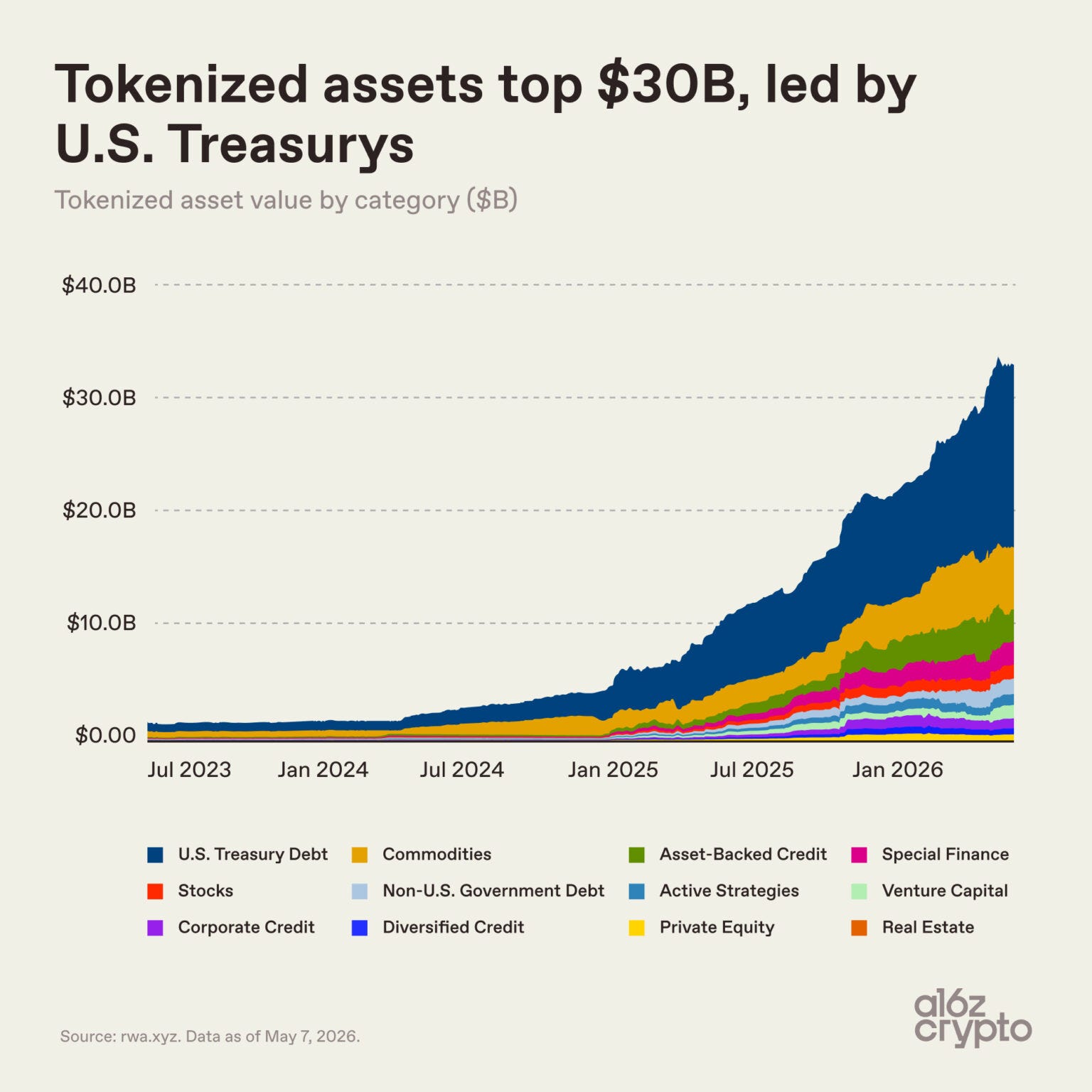
Tokenization not only works to tokenize existing stocks or commodities, it also unlocks cool use cases for new businesses, a recent great example is Venice founded by crypto OG Erik Voorhees, they have 2 different tokens, one that serves as “equity” to the business and its tied to their revenue and the other serves as inference, granting users x amount of it a day by holding it. These kind of use cases will keep appearing as a way for businesses to get liquidity (in good and bad ways, we’re in a free market after all) and for users to get access.
For trading, perps are the more interesting product. I learned the hard way on Bitmex that I’m not a trader, but have played around with products like Hyperliquid and Trade XYZ and they have genuinely impressed me. They’re not 100% decentralized (they’ll probably trend towards it, as I said before), but decentralization is always a spectrum. Having the same product quality but with no KYC, transparent enough and with proof of reserves is a big improvement over centralized exchanges.
Prediction Markets
People have been trying to build prediction markets for 10 years now, it took this long because the infrastructure wasn’t there. Now it is, and Polymarket proved the concept by going mainstream. A lot of users don’t even realize it’s crypto, which is the best possible signal.
Most of the volume right now is pure gambling, and that’s because these platforms grew fast, valuations got big, and now they need volume to justify it. That’s completely fine. But the real breakthrough use case is surfacing expert knowledge that can’t be shared publicly for political or institutional reasons. A scientist who knows something but can’t say it in the media for career reasons can still bet on it anonymously. That information surfaces in the price. That’s genuinely valuable for the world.
It’s already becoming true that when you want to quickly check whether a news story is real, you check a prediction market. These platforms will keep growing, probably with more gambling features because that’s where the revenue is, but as long as they preserve the truth-surfacing use case alongside it, it’s a net positive.

Why I’m still here
So why am I still here?
It’s inevitable that both the cypherpunk and fintech sides of crypto keep growing. The fintech side will bring crypto to billions: cheaper payments, access to dollars, programmable money. The cypherpunk side ensures that when people need to exit, they can. The fintech side is an onramp to the cypherpunk one. Every person using a fintech app built on crypto rails is one click away from self-custody, one click away from buying Bitcoin, one click away from exiting the system entirely. The infrastructure enabling both (decentralized, permissionless networks that anyone can build on and no one can shut down) is stronger than it’s ever been.
I see the fintech adoption of decentralized rails as a big improvement over the status quo. But what keeps me here is the cypherpunk side. I don’t trust centralized authorities, and building optionality matters more than most people realize. There are many important things to get right, but three stand out to me right now:
First, ownership. Crypto is the only place in the digital world where users can have true ownership. And that, self-custody of your money, your data, your identity, is the foundation that makes the freedom to exit possible. Everything valuable about crypto is downstream of self-custody, and while I don’t think that we should force anyone to hold their own keys I do think that everyone should have that option open. There’s still a lot of work needed here to improve the UX and security of these tools and get to the point where self-custody is a viable option for everyone.
Second, privacy. It’s hard to have freedom when everyone can see what you’re doing on a transparent ledger. Having the option to transact and own assets privately is fundamental, and we haven’t really solved this in crypto yet. Zcash is a great start, but we also need privacy on smart contract blockchains for people to be able to use defi and hold stablecoins in a private way. This will get solved by adding privacy tools in wallets themselves and making it really easy for the user to do it.
Third, verification. AI is going to make it trivially cheap to fake anything. We’re entering a world where you can’t trust what you see by default. Crypto does the opposite. It makes it possible to verify things without trusting a central party. They are complementary forces for the next decade. The more AI erodes trust, the more valuable crypto’s verification layer becomes.
Crypto won’t stop being chaotic, it’s a free market and because of that a reflection on society, bad things will be built on top of it. But at least it doesn’t need bailouts, it’s a self-correcting system that keeps improving and strengthening. The main objective is to give people complete optionality to experiment however they want, without forcing anyone to participate. Achieving this gives society the tools to maintain freedom and keep progress alive.