

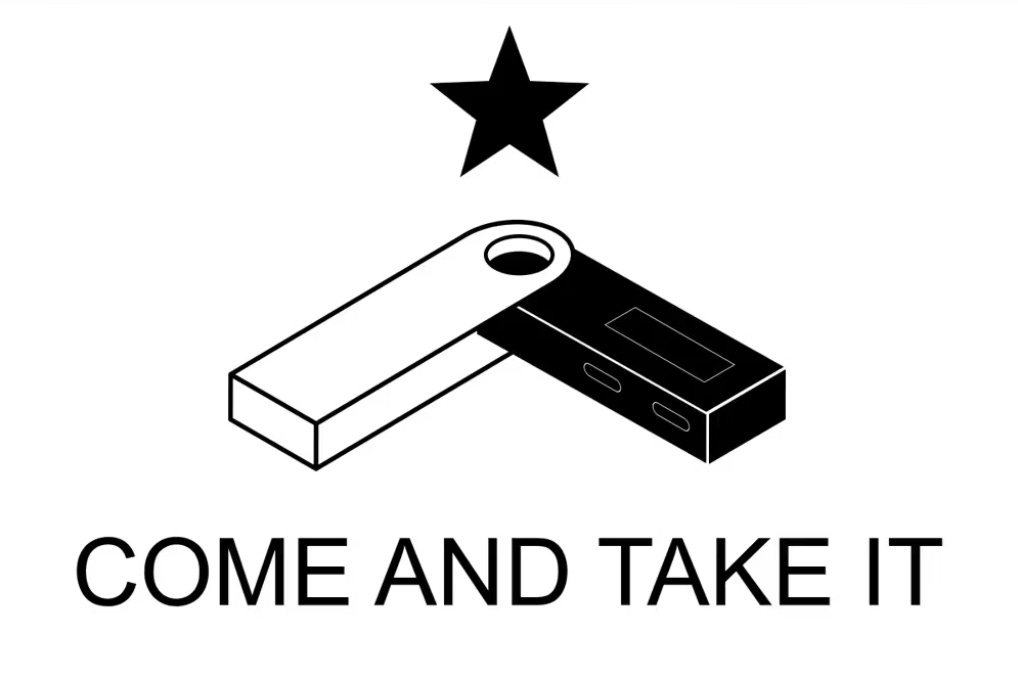
Crypto is valuable because it lets people store and transact value without having to ask for permission or trust anyone in the process. That was Satoshi's big breakthrough: a decentralized ledger of ownership where participants don’t have to trust each other and can still trust the network as a whole.
That property, trustlessness, is the foundation for everything else. And nothing can be trustless without the ability to self-custody:
Uncensorable money? Only if you hold the keys, not if an exchange does.
Private money? Impossible by definition if someone else has custody.
DeFi? Only if you control access, not if a company can freeze your position.
Permissionless markets, decentralized payments… all of them only work properly because self-custody exists.
Self-custody, at its core, means that the owner of an asset isn't trusting anybody else to access or transact with it. Whoever holds the keys controls the asset, without having to ask anyone for permission.
This is already rare in the physical world: easy with cash or small stuff you can store where you live, but even the ownership of your house depends on a government deed they can revoke at any moment. It's even rarer in the digital world: you don't own the money in your bank account, and you don't own your digital identity either: your social media handles, your iCloud photos, your Google docs. You never owned any of it, you're just trusting a corporation not to take your access away.
Crypto is the only place where that actually changes. It's the only system that lets you hold value in digital form the way you hold cash in your pocket.
And the mere existence of self-custody as an option is what creates the value in crypto, even for people who never fully use it. Anyone who interacts with a crypto protocol benefits from some of its values. There's a whole spectrum:
Buy the real coin and self-custody it → full upside, true ownership, and the freedom to exit on your own terms.
Self-custody a stablecoin or RWA → you get freedom and anonymity a bank account will never give you, even though the asset itself is centralized.
Hold an ETF → you get the upside of a scarce decentralized asset, but none of the ownership. An ETF of a centralized asset with "limited supply" would be worthless.
Full self-custody on one end, complete trust on the other. But the spectrum only exists because self-custody is an option in the first place.
I think the real goal of crypto is to increase freedom and optionality for everyone. But you can't get there without protocols nobody can switch off, censor, or control. Self-custody is what makes that possible.
We still have a long way to go for it to be accessible for everyone. It should come in multiple forms for different use cases: from abstracting the technical complexity for low-balance transactional wallets, to the most secure multi-sig setups for long-term wealth. If you actually care about crypto's values, one of the highest-leverage things you can do is make self-custody better, safer, and more accessible.
At least that’s what I'm doing :)